

We successfully cope with tasks of varying complexity, provide long-term guarantees and regularly master new technologies.

+91 9825382130
324 - Orchid plaza, Sama Savli road, B/H MC donald, Gujarat, Vadodara, India - 390024.
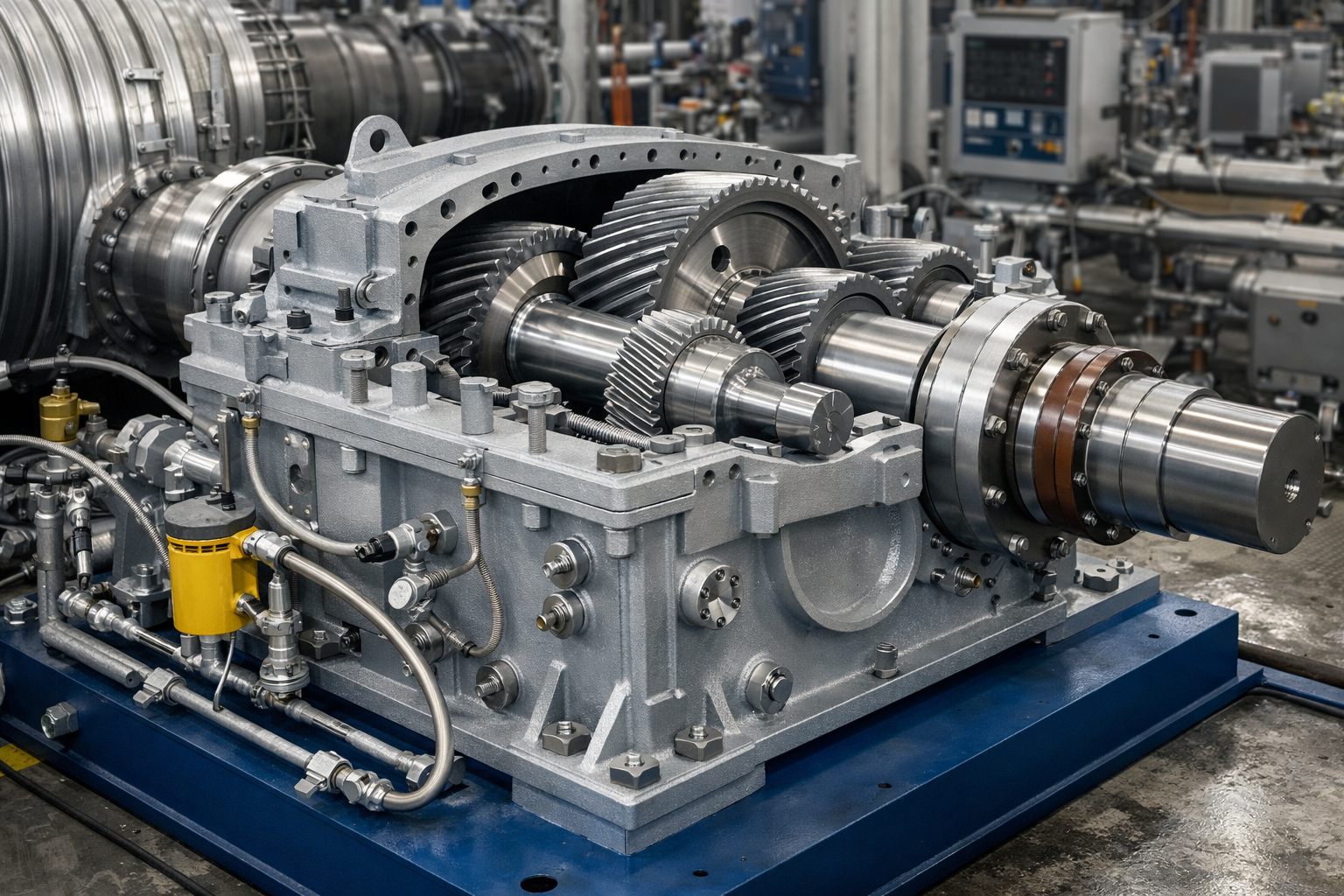
Gas turbines are widely used in power plants, oil & gas industries, and various industrial applications. One of the most critical components in a gas turbine system is the gas turbine gearbox, which plays a key role in transferring mechanical power from the turbine to the driven equipment.
A gas turbine typically operates at very high rotational speeds, while the connected equipment such as generators, compressors, or pumps often require lower and controlled speeds. The gearbox helps in matching these speeds efficiently, ensuring smooth and reliable operation.
A gas turbine gearbox is a mechanical device designed to adjust the rotational speed between the gas turbine and the driven machine. It transmits power from the turbine shaft while either reducing or increasing the speed according to operational requirements.
Without a properly designed gearbox, the turbine’s high-speed output would not be compatible with many industrial machines.
Gas turbine gearboxes are essential for maintaining operational efficiency and reliability in turbine systems. Their main roles include:
• Adjusting the turbine speed to match the driven equipment
• Efficient transmission of mechanical power
• Maintaining stable and safe operation of the turbine system
• Reducing mechanical stress on connected equipment
These functions make the gearbox a vital component in modern turbine installations.
Different types of gearboxes are used depending on the turbine design and application.
A reduction gearbox decreases the high rotational speed of the turbine to a lower speed suitable for generators, compressors, or pumps.
The accessory gearbox drives auxiliary systems such as fuel pumps, lubrication pumps, and hydraulic systems required for turbine operation.
Planetary gearboxes are compact and capable of handling high loads. They are commonly used in high-performance turbine applications.
A gas turbine gearbox consists of several important components that ensure efficient power transmission:
• Gear sets (typically helical gears for smooth operation)
• Input and output shafts
• Bearings to support rotating components
• Lubrication system to reduce friction and wear
• Gear casing or housing for protection and alignment
Proper design and maintenance of these components are essential for reliable turbine performance.
Like any mechanical system, gearboxes can experience issues if not maintained properly. Some common problems include:
• Gear wear or pitting
• Bearing damage
• Lubrication failure
• Excessive vibration
• Overheating
Regular inspection, oil analysis, and vibration monitoring can help detect problems early and prevent major failures.
The gas turbine gearbox is a crucial component that ensures efficient power transmission between the turbine and the driven equipment. By adjusting speed and maintaining smooth mechanical operation, it contributes significantly to the reliability and efficiency of turbine systems.
Proper design, quality manufacturing, and regular maintenance are essential to ensure long-term performance and operational safety.