

We successfully cope with tasks of varying complexity, provide long-term guarantees and regularly master new technologies.

+91 9825382130
324 - Orchid plaza, Sama Savli road, B/H MC donald, Gujarat, Vadodara, India - 390024.
The Science Behind Advanced Materials & Cooling Technology:
Gas turbines are the backbone of modern power generation and aviation, operating under extremely harsh conditions. The turbine section of a gas turbine engine faces temperatures that can exceed 1,500°C, far above the melting point of many conventional metals. Yet the blades remain structurally stable, delivering reliable performance for thousands of operating hours.
This remarkable capability is made possible through advanced materials, precision engineering, and innovative cooling technologies. Below is a complete breakdown of how and why gas turbine blades survive such extreme environments.
Nickel-Based Superalloys
Nickel-based superalloys are the most widely used materials for high-temperature turbine blades. They offer:
These alloys are engineered with complex compositions—including chromium, cobalt, aluminum, and refractory elements like rhenium— to enhance heat and stress tolerance
Cobalt-Based Superalloys
Cobalt-based alloys are widely used in areas where high thermal stability is essential. Although they generally have lower strength compared to nickel-based alloys, they provide:
They are especially useful in components exposed to combustion products and severe temperature fluctuations.
Single-Crystal Superalloys
One of the most significant advancements in turbine blade technology is the development of single-crystal blades. These blades are cast without grain boundaries, eliminating weak points that can cause creep or fatigue failure.
Key advantages:
This technology is commonly used in high-pressure turbine stages of modern aero engines and industrial gas turbines.
Ceramic Matrix Composites (CMCs)
Ceramic Matrix Composites are increasingly being used in the hottest parts of next-generation turbines.
Benefits include:
CMCs represent a major improvement in thermal efficiency and fuel consumption.
Titanium Alloys (for Compressor Blades)
While not used in the hottest turbine sections, titanium alloys are extensively used in compressor stages due to their:
These alloys help reduce engine weight and improve overall performance.
Materials alone cannot protect turbine blades from melting. A combination of cooling strategies and surface coatings ensures survival under extreme conditions.
Internal Cooling Channels
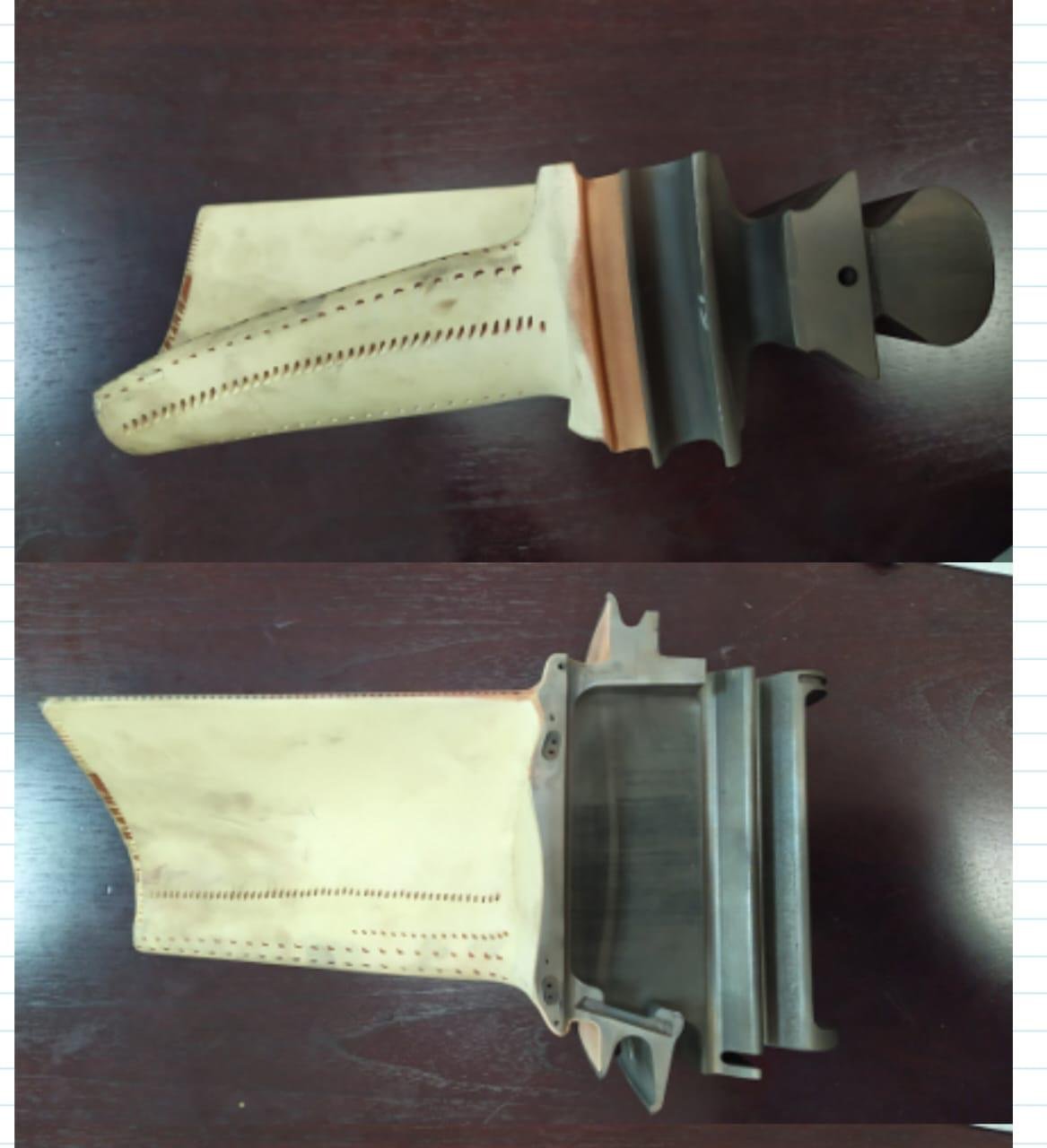
Advanced turbine blades are designed with intricate internal channels. Cool air is taken from the compressor and circulated through these passages to keep the metal temperature below critical limits.
Film Cooling Holes
Tiny holes on the blade surface allow cool air to exit and form a thin protective “film” of cooler air over the blade. This reduces the direct transfer of heat from the hot gases.
Thermal Barrier Coatings (TBCs)
Special ceramic coatings are applied to the blade surface to provide insulation. These coatings:
A commonly used coating is yttria-stabilized zirconia (YSZ), applied through plasma spray techniques.
Directional Solidification
Blades may also be manufactured using directional solidification processes, which create aligned grain structures that enhance creep resistance.
The creation of turbine blades involves some of the most advanced manufacturing techniques in the world, including:
These processes allow engineers to achieve extremely tight tolerances and complex geometries.
Gas turbine blades are marvels of modern engineering. Their ability to operate in temperatures higher than the melting point of many metals is a result of:
Together, these innovations ensure maximum efficiency, reliability, and longevity in both industrial gas turbines and aviation engines.